In the past, most funeral homes focused almost exclusively on the details of the service itself. Once the funeral concluded, their role often ended as well—perhaps with a referral to an outside counseling group, but little direct involvement beyond that point. For many families, this created a difficult gap. The support surrounding them during the service faded, yet their grief did not.
In fact, for many, the real grieving begins after the funeral. It starts when the fog of planning lifts, when the steady stream of visitors slows, and when the world quietly expects life to return to “normal”—even though nothing feels normal at all. The circle of support grows smaller, and families are left to navigate an overwhelming new reality on their own. This experience became all too common.
Only in recent years, with a new generation of compassionate and forward-thinking funeral directors, has this dynamic begun to shift. Today, aftercare is no longer treated as an afterthought—it is becoming a core part of the funeral home’s mission. These funeral professionals recognize that their responsibility to support grieving families extends beyond the day of the service. They are committed to walking alongside families in the weeks and months that follow, offering continued connection and care.
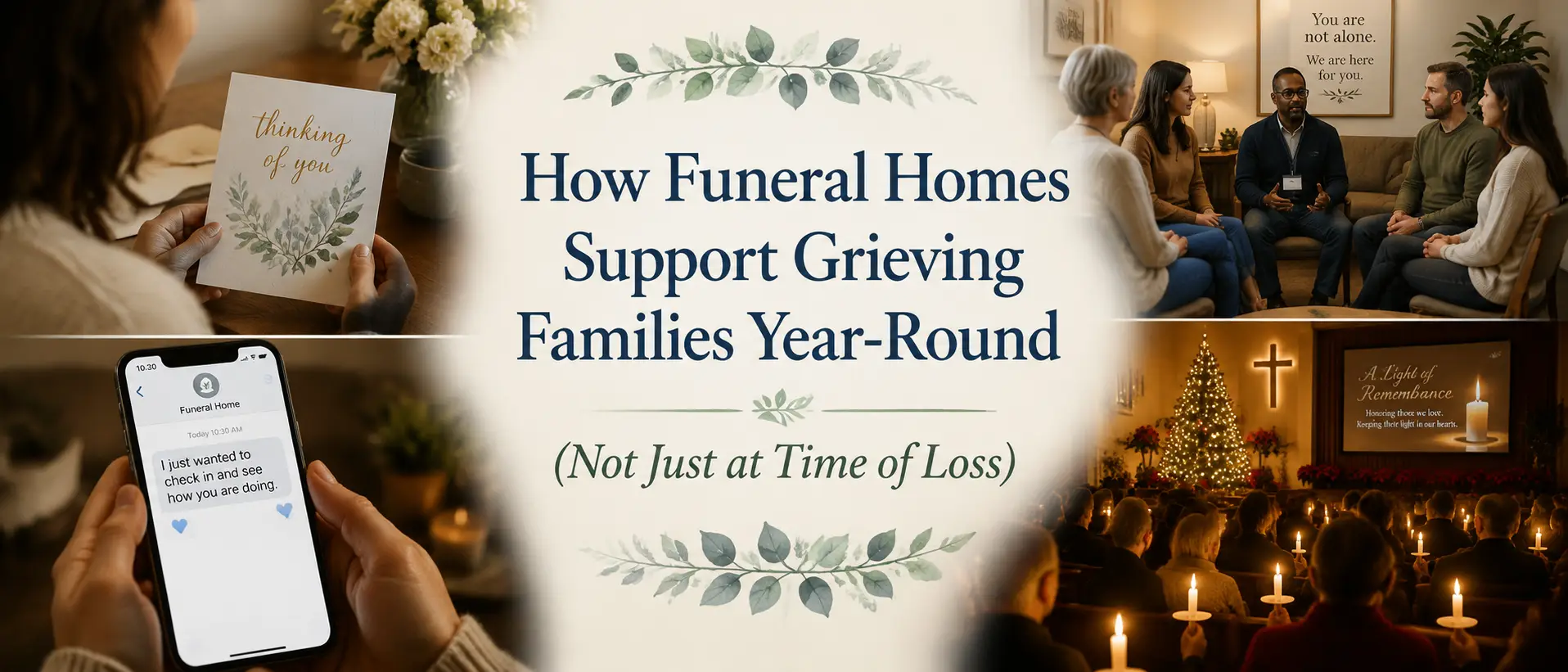
Whether through therapy groups, in-house counseling, holiday remembrance services, follow-up texts and check-ins, or access to meaningful grief resources, they are creating lasting systems of support. In doing so, funeral homes are redefining their role—not just as providers of a service, but as ongoing partners in the healing process, ensuring that no family feels alone as they move through their grief journey.
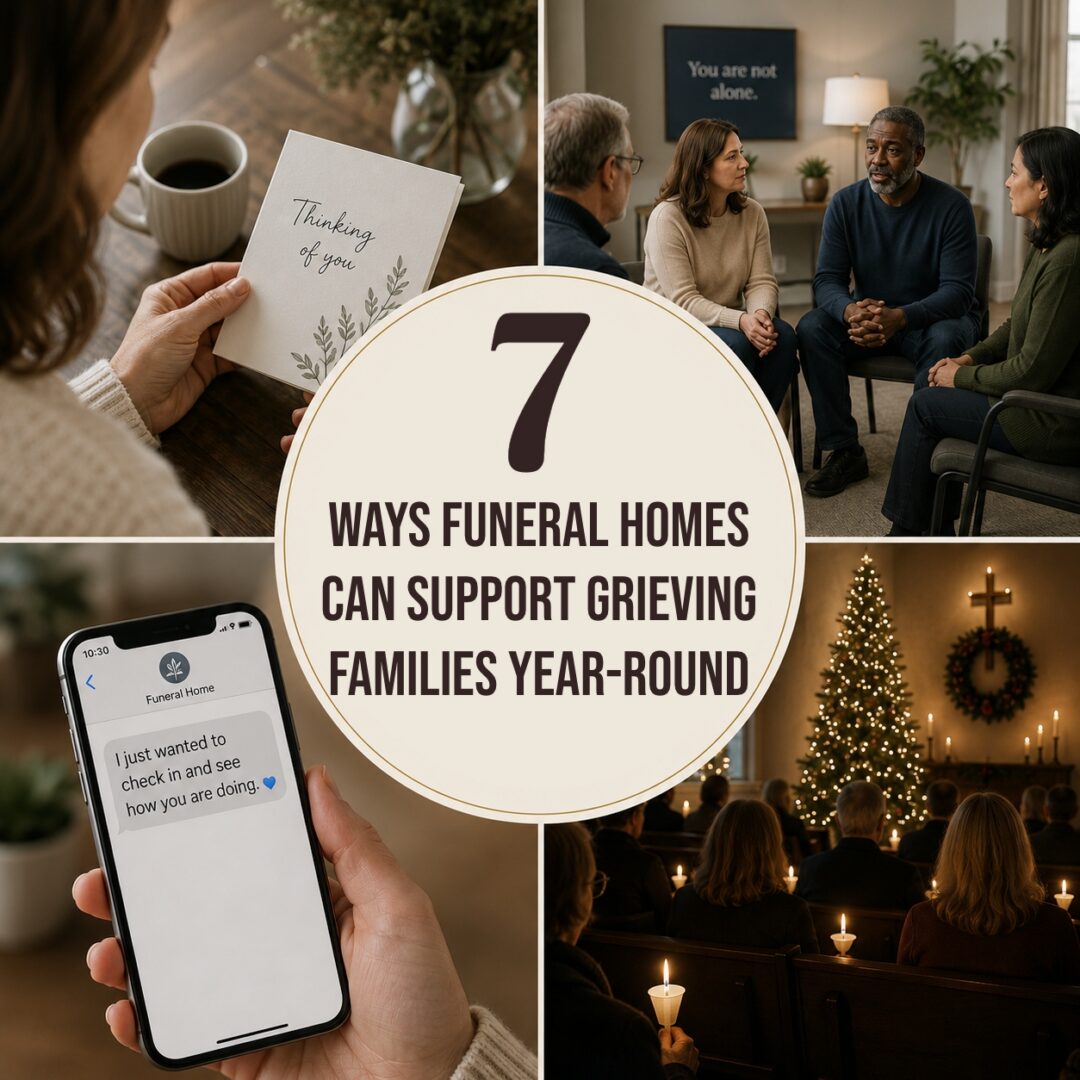
Here are 7 Ways Funeral Homes Can Support Grieving Families Year-Round
1. Grief Support Groups
Ludwick Funeral Home in Kutztown, PA shares information on their 6-week Living With Loss support group facilitated by an in-house counselor.
It has often been said that grief shared is grief diminished, as the act of discussing the raw emotions one experiences after a loss can help reduce their intensity. Grief therapy groups have existed for many years for this very important reason. In the past, ASD used to handle the occasional call from someone hoping a mortuary might be able to refer them to a group. Today, funeral homes are taking a much more active role in helping families find the support they need. Closing this gap is so essential because it means families are no longer left to figure out where to turn or who they should contact.
Today’s funeral directors dedicate considerable time to facilitating grief support groups. While some firms hire a Counseling Specialist to their staff to coordinate events, others partner with outside agencies such as churches, hospice organizations, senior advocate groups or non-profits. We have seen a lot of different approaches including offering a multi-week grief series with a specific theme or having a standard day of the week or month when group therapy is always offered. Other ideas include having a specific activity tied to the class such as creating a keepsake item or holding virtual group therapy sessions for those who can’t attend in person.
Johnson-Hughes Funeral Home in Herrin, IL partnered with a Senior Living organization to hold a community grief support event last Fall.
2. Follow up text messages and calls
A video shared by Martin and Castille Funeral Home in Lafayette, LA featuring a family expressing how much they appreciated the funeral home continuing to check in after her loss.
“I just wanted to check in and see how you are doing.”
It’s amazing how those 12 little words can mean so much to someone who has experienced a recent loss. When families start to see their circle of support grow shorter in the weeks and months that follow a funeral, taking the time to reach out with a simple message like this can be so meaningful. There are several different strategies funeral homes can use to ensure families receive regular follow up communication from the funeral home. Setting up reminders for yourself and your staff to routinely reach out to families is a great starting point. You can also utilize newer automated aftercare text messaging solutions such as the ones offered by Tukios, Tribute Tech and Aftercare.com.
3. Holiday Programs
O’Donnell Cremations – Funerals – Celebrations in Danvers, MA shares photos from their funeral home’s holiday remembrance service.
For those who are mourning the loss of a significant person in their lives, it can feel as though the whole world has moved on without you. This is especially true during jubilation of the holiday season when grief can make one feel like the only boat floating against the current. That is why the role of a funeral director is so vital, especially during the holidays. Families who are suffering a loss need to understand they are not invisible and not alone, and many funeral homes have done a tremendous job promoting that message within their communities.
For decades, funeral homes have held holiday remembrance services inviting families that have lost a loved one the previous year to come together. Whether they come to hear their loved one’s name read aloud or to place a memorial ornament on a remembrance tree, that acknowledgment is no small thing. It means the world to so many people who often feel invisible during that time of year. Other meaningful holiday traditions we have seen include holding a Valentine’s Day luncheon for Seniors or a Memorial Day ceremony with military rites.
Connell Funeral Home in Bethlehem, PA shares photos from their funeral home’s annual holiday service. We love this line from their post: “It takes real courage to walk back into a space tied to loss, and even more strength to show up with open hearts.” How true.
4. Mailed Letters Acknowledging Difficult Dates

One of the hardest parts of grief is how invisible your pain feels. It’s the reason for many years people wore black mourning clothing after a death of a loved one so that others would remember to acknowledge their loss. Today, those who are grieving often feel as though the world has moved one while they remain stuck in time. This is why it’s so important that funeral homes go the extra mile and send out letters to acknowledge those difficult dates on the calendar. A loved one’s birthday and the date that they passed are two particularly difficult days. Many caring morticians help to make families feel less alone simply by reminding them that they are thinking of them and their loved one.
5. Grief Resources Shared Months Later
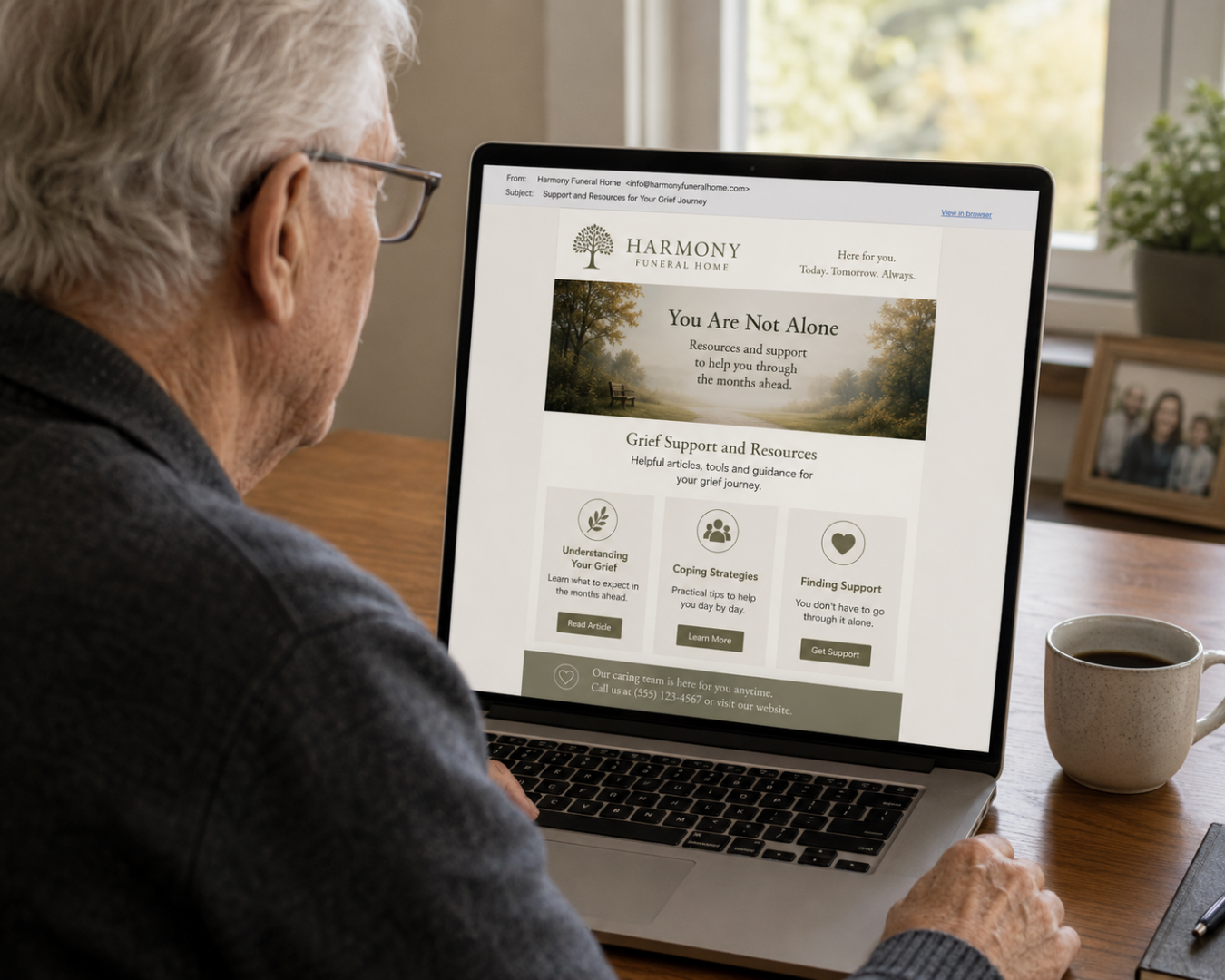
Funeral home aftercare is about demonstrating how you support grieving families in different ways. One of the most impactful ways to do this is to continually share resources that might help people who are struggling to cope after a loss. Whether through your funeral home’s email newsletter, online social media, blog, videos or partnership with an outside agency such as GriefPlan.com, giving families access to supportive materials can remind them they are not alone in their grief journey. Even months after the funeral service, thoughtful outreach can provide comfort, encouragement and practical guidance during difficult moments. By consistently offering meaningful grief support, funeral homes strengthen relationships with families while reinforcing their role as a trusted source of care and compassion in the community.
6. Help with Estate and Probate Guidance
Minshall-Shropshire-Blehyler Funeral Home in Media, PA provides guidance on handling legal matters after loss.
After a loss, many families are suddenly faced with complicated questions surrounding probate, estate settlement, benefits, insurance claims and financial accounts. For many people, these responsibilities can feel overwhelming — especially while grieving. Funeral directors are often one of the first trusted professionals families turn to during this time, placing them in a unique position to help point families in the right direction rather than leaving them to navigate these challenges alone. While funeral directors are not attorneys or legal advisors, they can still play an important role by connecting families with reliable resources and guidance. Aftercare and estate settlement solutions such as Cadence or Everything After help simplify the process by walking families through important next steps including government notifications, account closures, insurance claims, benefit applications and more.
7. Participate in Community Events
Colonial Funeral Home in McHenry, IL participating in a local Senior Fair earlier this month.
Funeral home aftercare extends far beyond follow-up calls and grief resources — it also includes maintaining a meaningful presence within the community. By participating in senior fairs, sponsoring outings or trips for older adults or supporting local senior organizations, funeral homes demonstrate an ongoing commitment to the well-being of the families they serve. These events provide opportunities for social connection, education and emotional support, all of which can be especially valuable for seniors who may be experiencing loneliness, caregiving stress or grief. Community involvement helps funeral homes build trusted relationships before and after a loss occurs, showing families that their care and compassion continue long after the funeral service has ended.
Are you looking for ways to find more time to dedicate to your funeral home’s aftercare strategy? Take advantage of ASD’s 30 Day Free Trial and discover how our answering service can help you and your team spend less time tethered to the phones and more time to support grieving families.
Related Reading
7 Funeral Home Community Engagement Ideas to Inspire Your Next Event
8 Grief Resources Funeral Professionals Should Know About
More than Morticians: The Surprising Number of Jobs Funeral Directors Juggle