
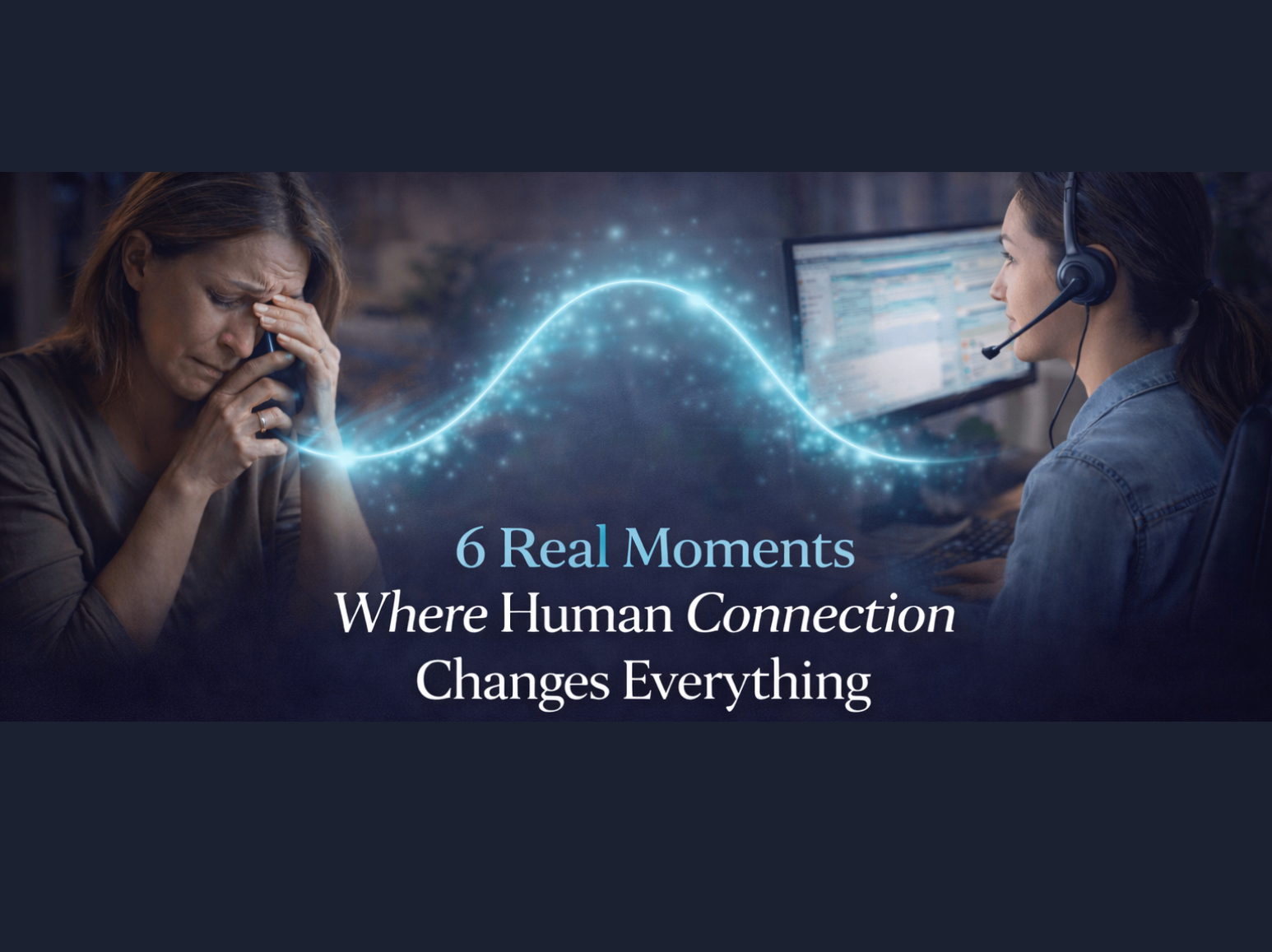
Answering calls for funeral homes is not a typical call center job. The vast majority of people have the ability to read a call script and type information relayed over the phone. Most people cannot, however, authentically convey compassion to a bereaved person while expertly deciphering their needs for a funeral business. It’s hard to fully convey the range of different calls, complex scenarios and extreme emotions our Call Specialists encounter during any giving shift. It’s why we always tell job applicants interested on working here that only a select few graduate from our comprehensive training program and go on to have a career at ASD. This work is not for everyone, but it is essential work that should not be done by anyone except emotionally intelligent humans.
During those many years our company worked to improve and refine our answering service’s training program, one question we never thought we would have to answer is: how will your answering service compete against artificial intelligence call agents? Indeed, the growth of AI capabilities has astonished just about everyone, and we are no exception. However, we have welcomed opportunities to use AI to enhance our answering service with new improvements like call transcriptions and quality assurance tools without altering that all important human element.
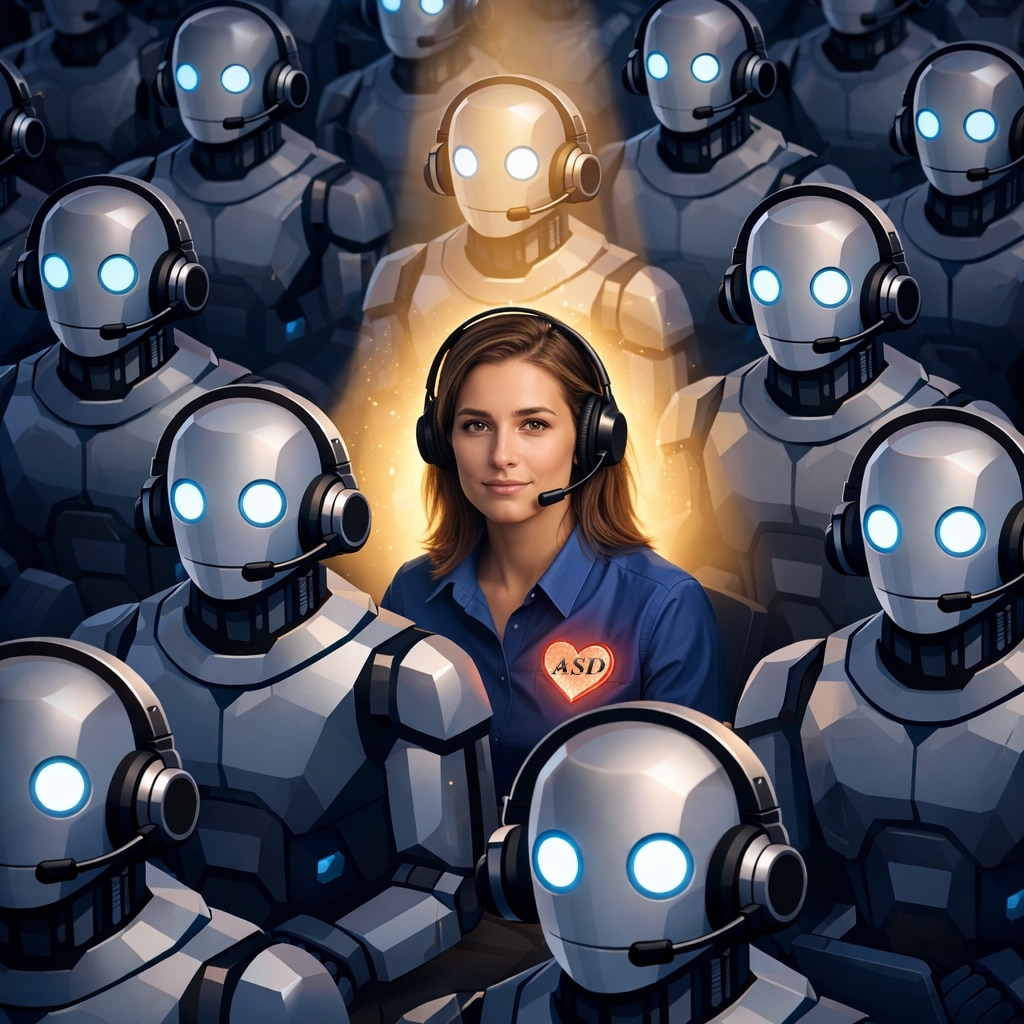
When you think about the type of funeral home call scenarios we encounter at ASD, there are three essential traits our Call Specialists possess which no machine can replicate. The first is our voice – that authentic tone of voice that is so crucial to forging a connection with callers. Did you know that we immediately disqualify a job candidate if they have a poor tone during their telephone introduction? The second is our brain which give us the ability to think critically and hear not just what a caller is saying but what they aren’t saying. Understanding the needs of funeral home callers goes beyond something that can be programmed—it requires honed skills and an awareness of human nature that AI simply cannot possess. Finally – most important, our heart which allow us to provide bereaved callers with an authentic response to their grief deeply rooted in compassion and empathy.
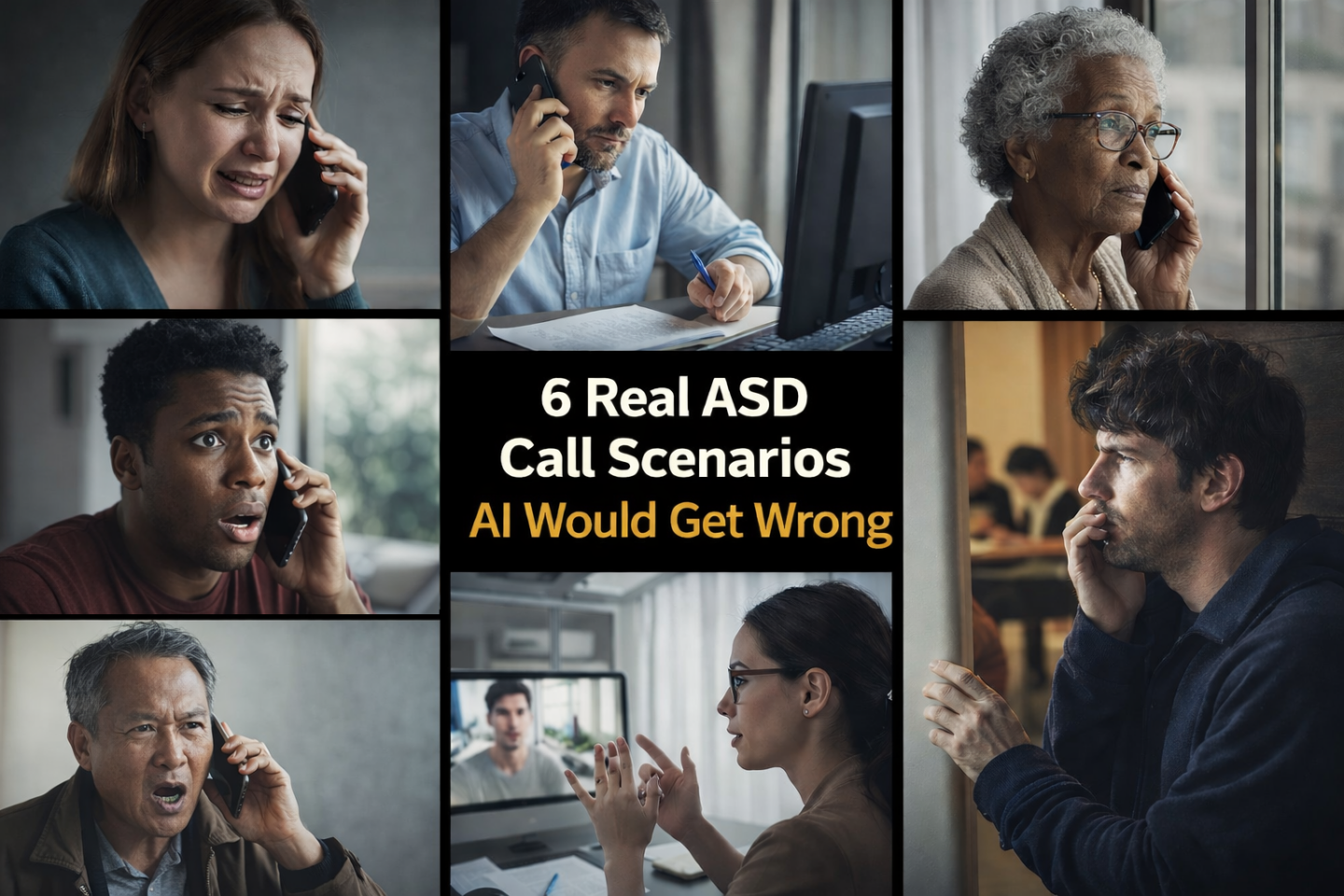
To demonstrate just how essential these traits are for answering funeral home phone calls, we’re taking a look at real-life funeral home call scenarios that require a human touch.
1. When callers are distraught
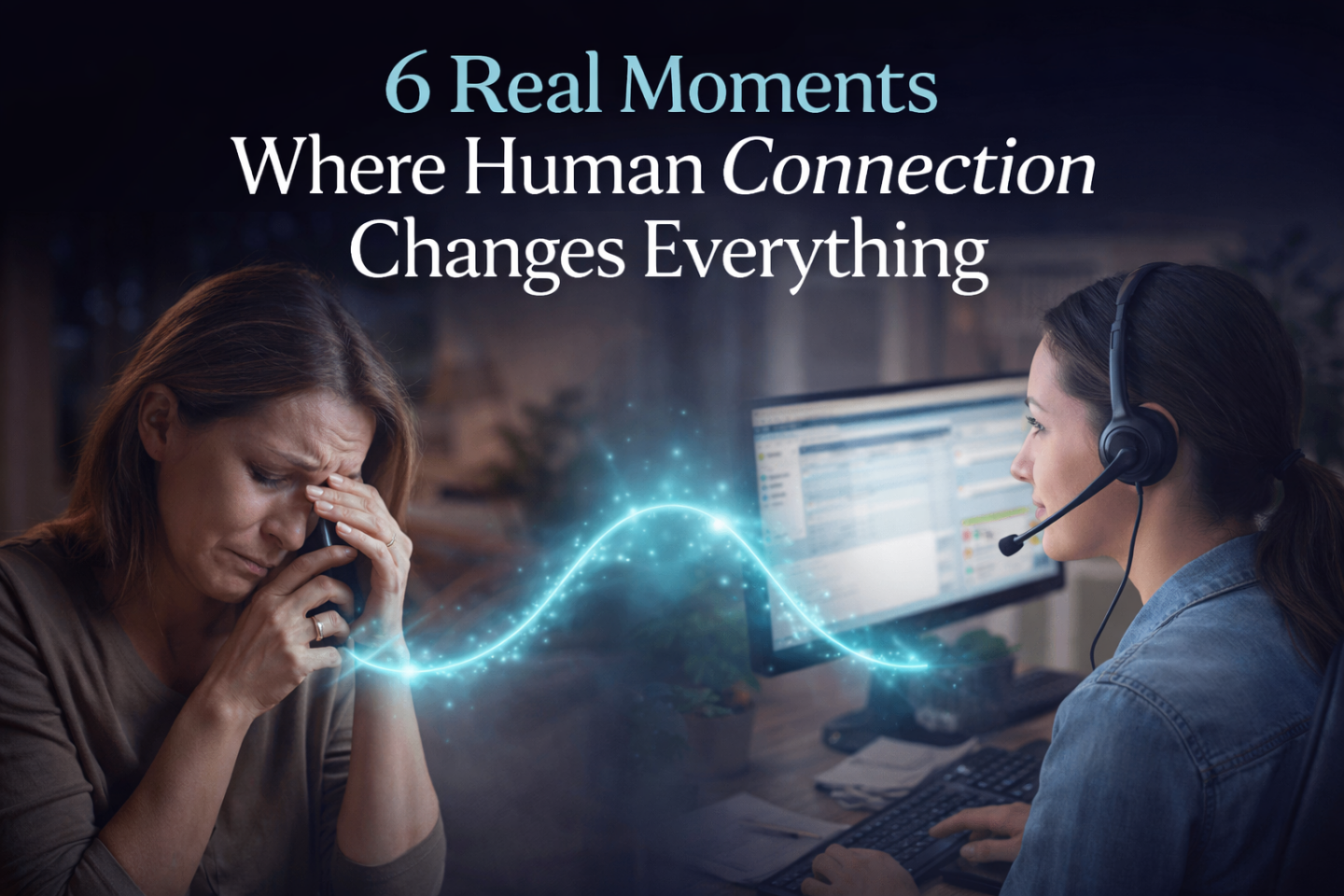
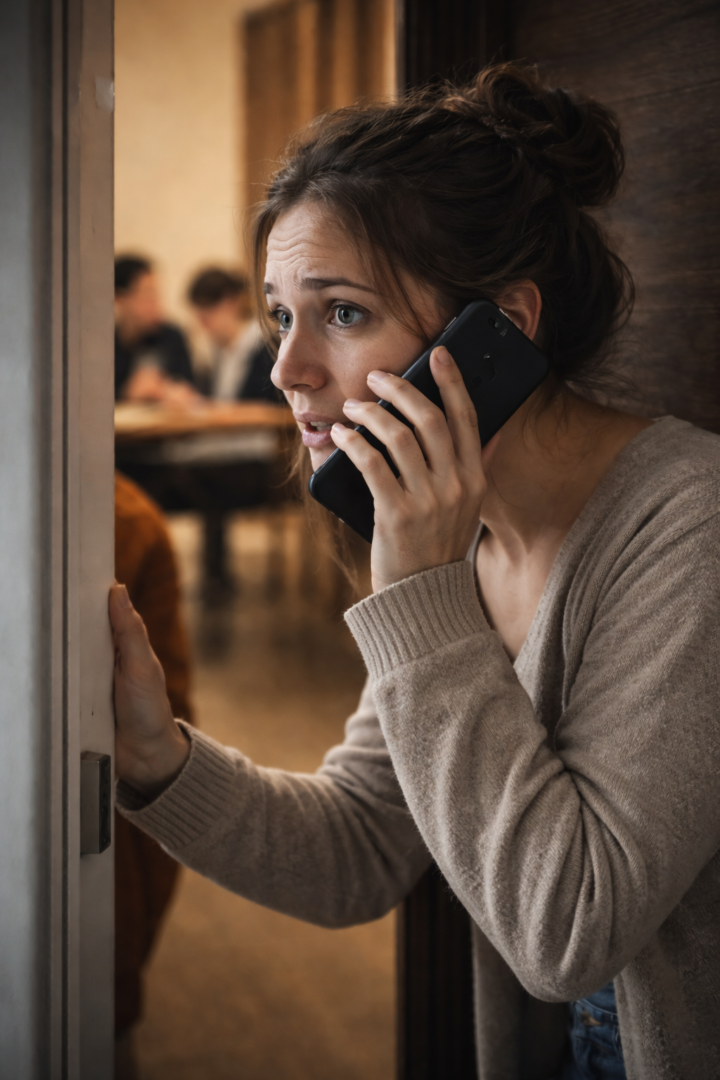
You might be surprised to learn just how many calls we handle that begin with a caller sobbing on the line.
It’s not hard to imagine how it happens. A person whose life has been turned upside down by a loss collects themselves enough where they feel like they can call the funeral home. During those few seconds when the phone is dialing the number and ringing, their brain is literally coming out of shock, reminding them that this person they loved so deeply is no longer in the world with them. Our Call Specialist is very often the first person they have to communicate with while simultaneously going through those extreme emotions and realizations. These calls are never easy, but our team understands how to make this difficult task just a little easier for families by giving them the time they need to compose themselves and to respond gently.
When you think about it, a sob is probably the most human sound there is. How does a computer interpret a human sob? What is the programmed response? More importantly, do we really want to know the answer to that question?
2. When callers are still on the fence about your funeral home
One of the things we pride ourselves on at ASD is our answering service’s ability to safeguard business opportunities for our clients. Our Call Specialists are specifically trained to recognize the potential value of price shoppers and preneed inquiries. This requires agents to understand the important nuances of what callers are saying, listen for those unspoken cues to hear what they aren’t saying, and to ask the necessary follow up questions to determine what the call is concerning.
For instance, if person calls a funeral home and asks, “I was wondering how many people your chapel can hold” or “Can you do a funeral on a Saturday?”, an ASD Call Specialist understands that a person most likely would not be asking that question unless someone has passed or may soon pass away. If a person calls a funeral home and says, “Just have them call me” and you can audibly hear their voice crack and a shark intake a breath when they speak, a Call Specialists will recognize there is more going on beyond the word expressed. Their extensive training combined with the experience of answering solely for funeral homes ensures no at-need or pre-need message is overlooked.
In contrast, a computer lacks the sophistication to decipher the nuances of human nature when it comes to these sensitive communications. While it may be true that AI can be programmed to ask follow up questions, we are still many years away from it being able to make intuitive choices based on how it interprets human behavior. Once AI can do that, we might start to worry (and you probably should too!), but until then do not trust your funeral home’s business opportunities to a machine.

3. When callers are considering taking their own life
Perhaps the most difficult call an ASD Call Specialist might handle is a call from someone in crisis who is considering suicide. This happens more often than you might expect. Whether it is related to a person’s extreme grief over the loss of a loved one or a desire to make prearrangements with a funeral home before committing the act, when someone is feeling hopeless, they often call our clients. ASD Call Specialists have been deeply affected by these extremely difficult conversations. The prevalence of suicide-related calls actually led ASD’s in-house technical team to develop a solution both to help people in crisis and to better support our Call Specialists. Our answering service is linked directly to trained suicide hotline operators who can be patched directly into the call without ever disconnecting the caller.
ASD’s STOP system was born out of a desire to combine a technology solution with all important human element in order to possibly save a life. This solution has helped real people by putting them in touch with experts who are best able to provide the necessary counseling these delicate situations require. We don’t want to think about how AI might respond to a distressed caller who expresses a desire to take their own life. Studies have shown it is highly inconsistent when dealing with queries related to suicide, leading to potentially harmful interactions.
4. When callers need someone to recognize the urgency of their situation
What type of messages do you think are urgent and require someone to be notified of without delay? Every funeral home has a different answer and we screen calls accordingly at ASD. AI would be able to screen calls based on a pre-set criterion also, it’s true. However, one thing AI cannot do is recognize when something out of the norm and requires immediate attention. Whether it’s someone who wants to stop a cremation from taking place, a personal family emergency, an urgent call from someone at the funeral home door or some other situation that requires immediate attention, our Call Specialists have the skills necessary to properly assess the urgency level of any given call. It’s more than just following protocol – it’s putting yourself in the shoes of the funeral director and asking, “would I want to be contacted about this?”
A great example is a call ASD once handled that helped a funeral director reunite with his birth mother. The call came in the middle of the night as the woman calling was from Italy trying to get in touch with her son who she had given up for adoption 50 years ago. The Call Specialist, who was Spanish bilingual, was able to understand the caller enough interpret her reason for calling and immediately notified the director whose name matched the name the caller was searching for. Later, the funeral director reached out to ASD to express his gratitude for the handling of the call and to let us know he was planning to meet her the following month. It’s not an everyday occurrence but during a critical moment like that, having a human being that understands the gravity of the situation is paramount.
5. When callers have an unusual need
A woman who adamantly wanted her husband’s beard to be shaved off before he was cremated.
A firehouse chief that wanted to know what he should do with a jar of human teeth that was left at the fire station
An amputee victim who wanted to have their limb cremated
A man who wanted to know if his daughter’s boyfriend would be thrown out of a funeral if he wore a hat
These are just a few of the very real callers ASD Call Specialists have spoken to recently. When we talk about funeral home call scenarios we couldn’t make up, these are the type of conversations we’re talking about. While all of these calls may be on the strange or unusual side, they still require tact and professionalism that only a real human being can provide. We can imagine many of these callers ending up in a never-ending loop with an AI chat box who can’t understand their request.
6. When callers are hearing impaired
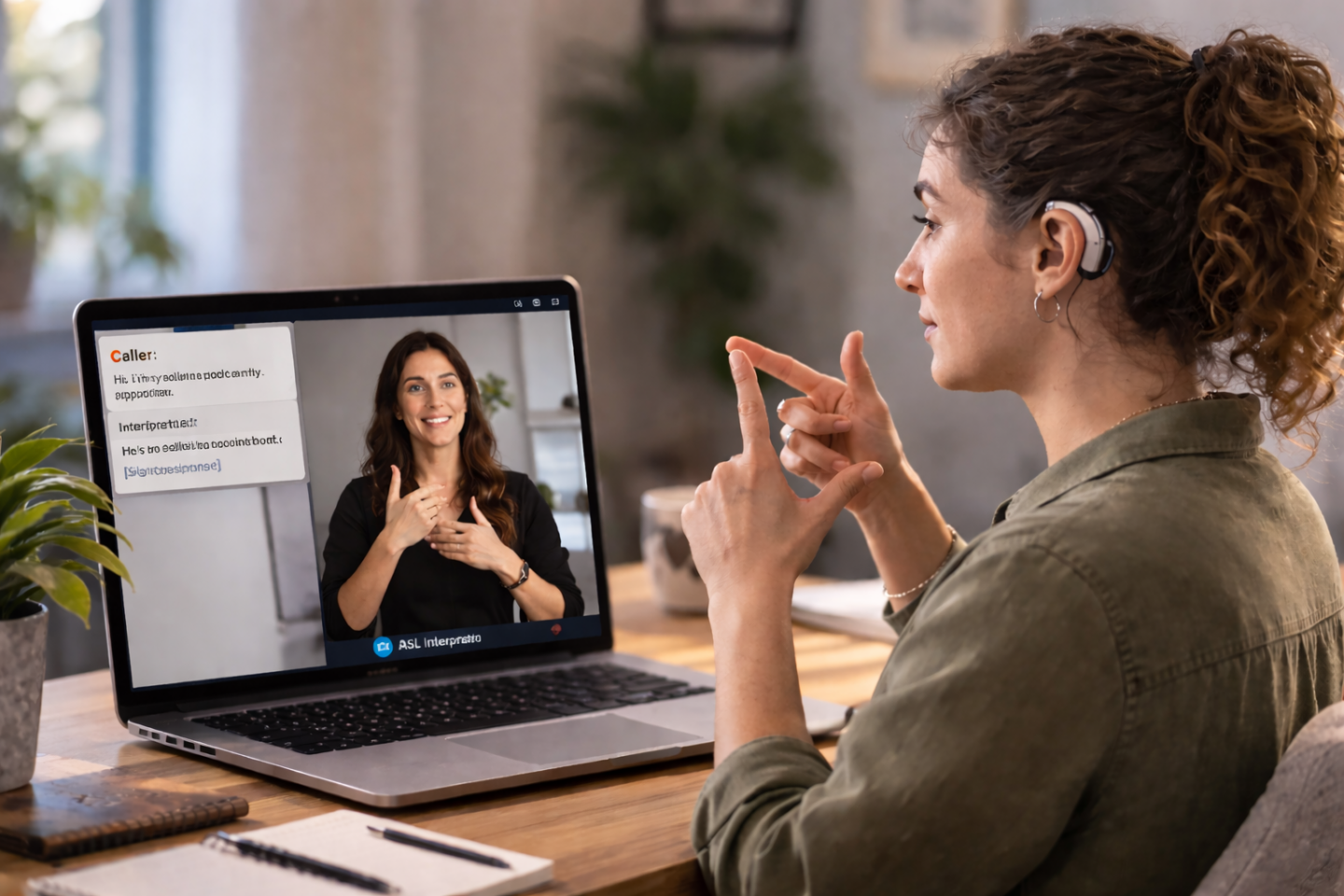
For individuals who are hearing impaired, Video Relay Services (VRS) provide a vital communication bridge, enabling telephone conversations through a qualified interpreter. However, when AI chatbots handle VRS calls, issues can arise with timing, pacing, and voice recognition. VRS conversations follow a different rhythm than standard calls, which can easily confuse automated systems. This often leads to stalled interactions or frustrating loops, forcing callers to try again or seek alternative contact methods.
These kinds of technological blind spots highlight the limitations of relying on AI for sensitive communications, such as funeral home phone calls. In contrast, ASD Call Specialists are specifically trained to work effectively with VRS, ensuring clear, respectful communication. Callers who are hearing impaired deserve to be understood—and to receive the same level of care, empathy, and reliability as anyone else.
For More On This Subject…
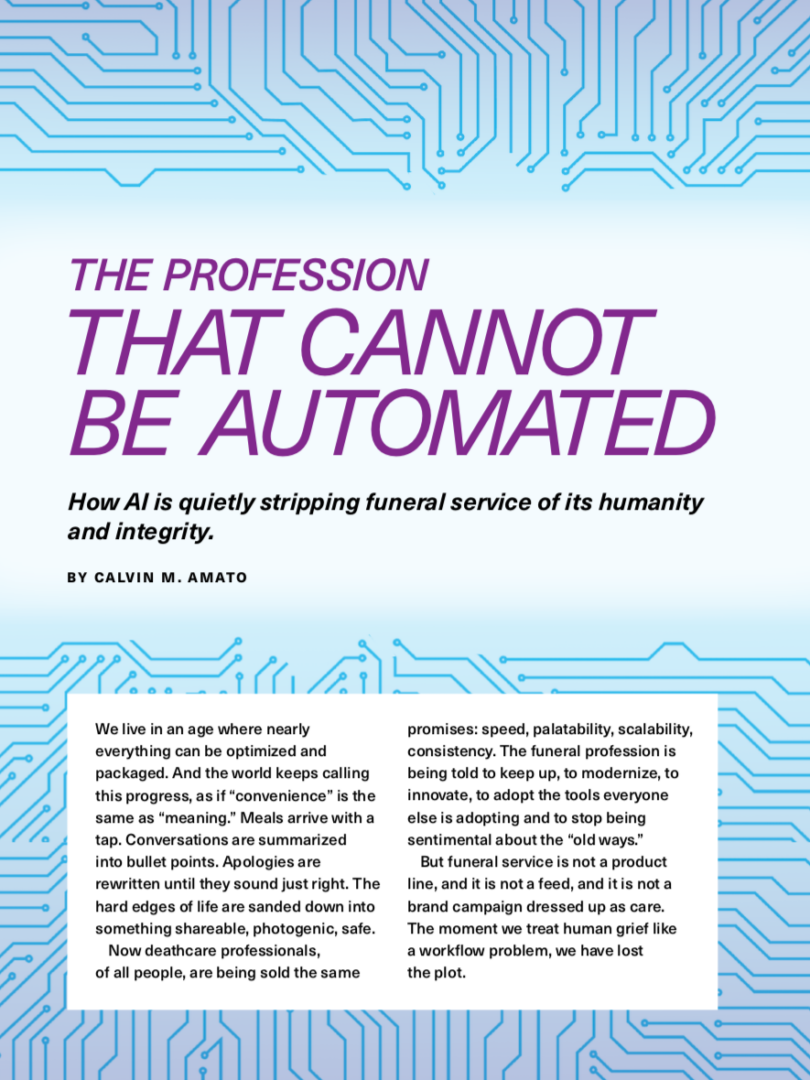
If you are a funeral director trying to decide how and when you should use AI for your funeral home or struggling with the ethics of using it, we highly recommend checking out Calvin M. Amato’s essay, “The Profession that Cannot Be Automated.” Originally published in the March 2026 issue of The Director magazine, the article provides a grounded argument on how AI is quietly stripping funeral service of its humanity and integrity. Here’s an excerpt we wanted to share:
“Funeral professionals should be deeply suspicious of anything that makes it easier to look compassionate but harder to actually practice compassion. If we cannot tell the difference between real care and scripted care, we eventually will become a profession of beautifully phrased emptiness.”
We highly recommend giving it a read. Click here on on the image below to access a PDF of the article (shared with permission from the NFDA).
Related Reading
Technology With a Human Touch: ASD’s Approach to AI in Funeral Home Answering
ASD Empowers Funeral Homes with Automatic Message Transcriptions
7 ASD Features that Matter Most to Your Funeral Home Callers
One Response
It’s wild how much nuance goes into funeral service calls that AI just can’t grasp yet. Definitely agree that human empathy is irreplaceable in this line of work.