
One of my favorite parts of my job is reading. I relish the task. At any given time, you will find my internet browser tabs filled up with different essays, blog posts and articles written of, by and for funeral professionals. I’ve been doing this job long enough I sometimes wax nostalgia about the “old” days when everyone had a blog instead of a podcast, there were no pay walls, and you didn’t have to stop in the middle of reading something to ask yourself, “did AI write this?”
I often feel starved for good writing as it does seem like fewer and fewer people are dedicated to the craft these days and even less people are interested in reading. I am famous for sending long articles to people who prefer podcasts because I am secretly hoping this turn of phrase in this piece of writing will reawaken their love of reading. Even now as I write this, I am painfully aware of the fact that I might reach more people if I ditched our blog and created a podcast for ASD instead (we actually did have one many years ago, before anyone was listening to them. There is a certain irony to that). Don’t worry…I am going to keep writing this blog as long as they let me!
As Mark Twain might have said, the rumors of the death of great writing have been greatly exaggerated. There are still fantastic writers out there using their unique voices and perspectives to create compelling pieces of writing for funeral directors. You just have to know where to find it. I know how busy funeral directors are, so lucky for you I have taken it upon myself to compile a list of some of the best articles, essays and blogs I have read recently. You can pay me back by passing this along to anyone you know who might need their love of reading to be reawakened.
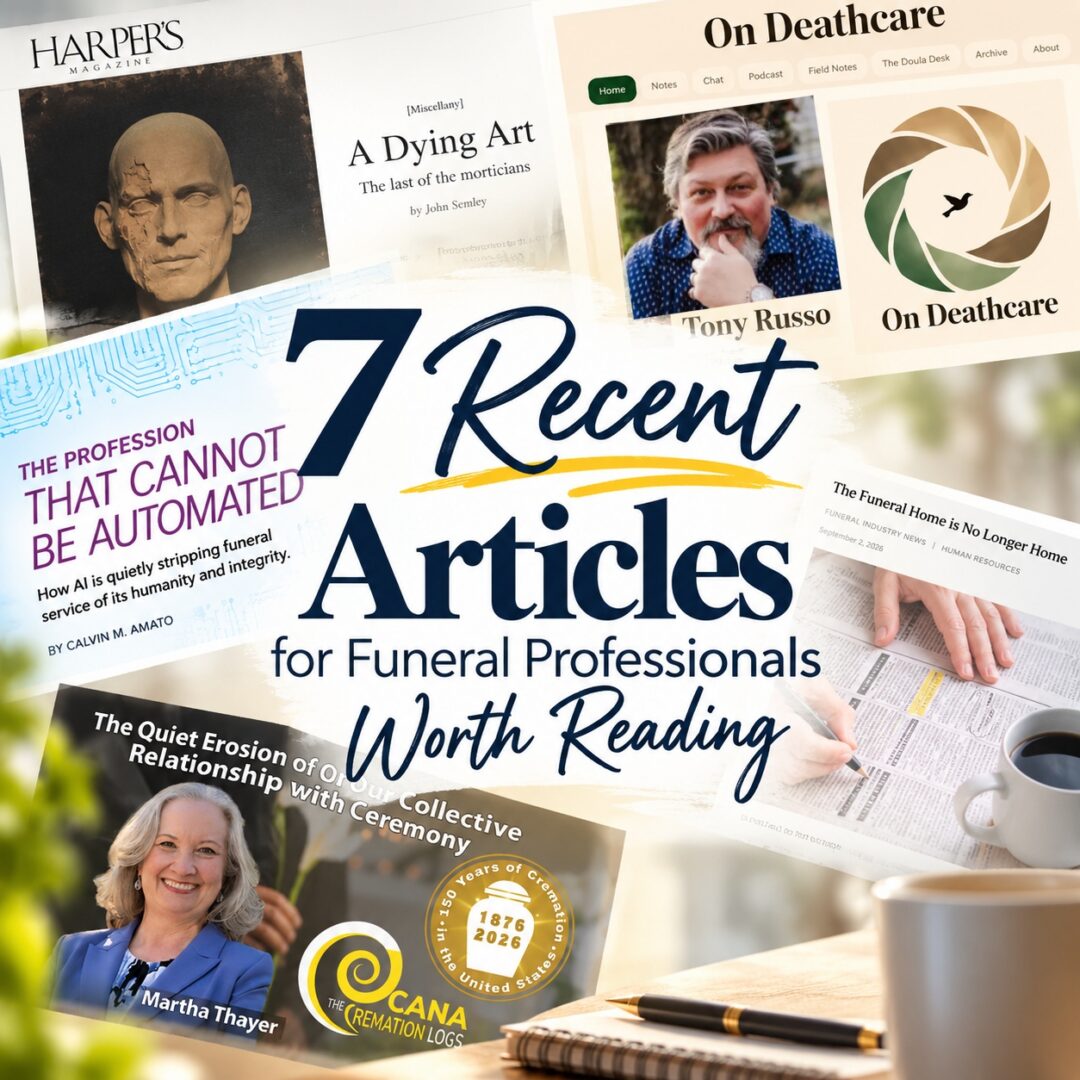
Here are 7 recent articles for funeral professionals worth reading
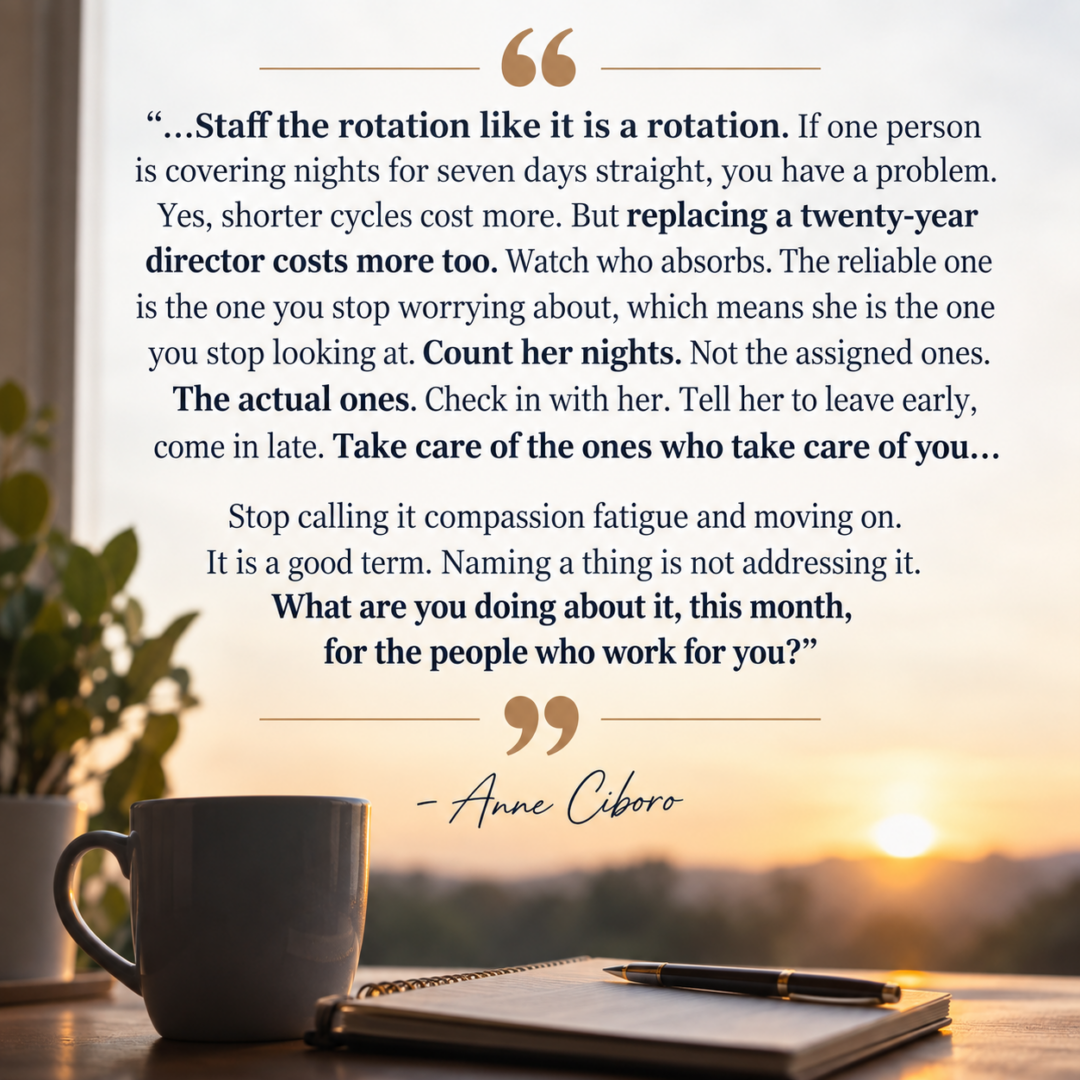
1. “The Funeral Home is No Longer Home” by Anne Ciboro (Published by ConnectingDirectors.com)
This piece is actually what inspired me to write this blog. I have forwarded it to so many people because I truly believe the profession would benefit from having as many people read and share it as possible. The essay tackles funeral director burnout and compassion fatigue—a familiar topic that has been covered many times in nearly every mortuary trade journal. Coincidentally, the very first article I ever wrote for ASD was about compassion fatigue. There is a reason we keep returning to this subject: it is an incredibly common issue that affects so many funeral directors.
What makes Ciboro’s essay so compelling is that it doesn’t waste time explaining compassion fatigue to funeral directors. You already know it. You live with it. Instead, she identifies how the problem develops, tracing the exact chain of events that allows it to continue: the on-call lifestyle, the constant interruptions, the lack of boundaries, the tendency to reward the most capable and dependable employees with an ever-growing workload simply because they can handle it, and the gradual transformation of the funeral home from a family home into a workplace that never truly closes.
Of all the articles for funeral professionals on this list, this is one I would particularly recommend to mortuary owners because it provides concrete reasons why this issue isn’t just one that impacts employees, but the overall success of the funeral home. Her arguments are both compelling and convincing. She then provides real, actionable advice on how owners can identify when they have a problem and what steps must be taken to alleviate it.
Do yourself, and your staff, a favor by taking a few minutes to read the full article here.
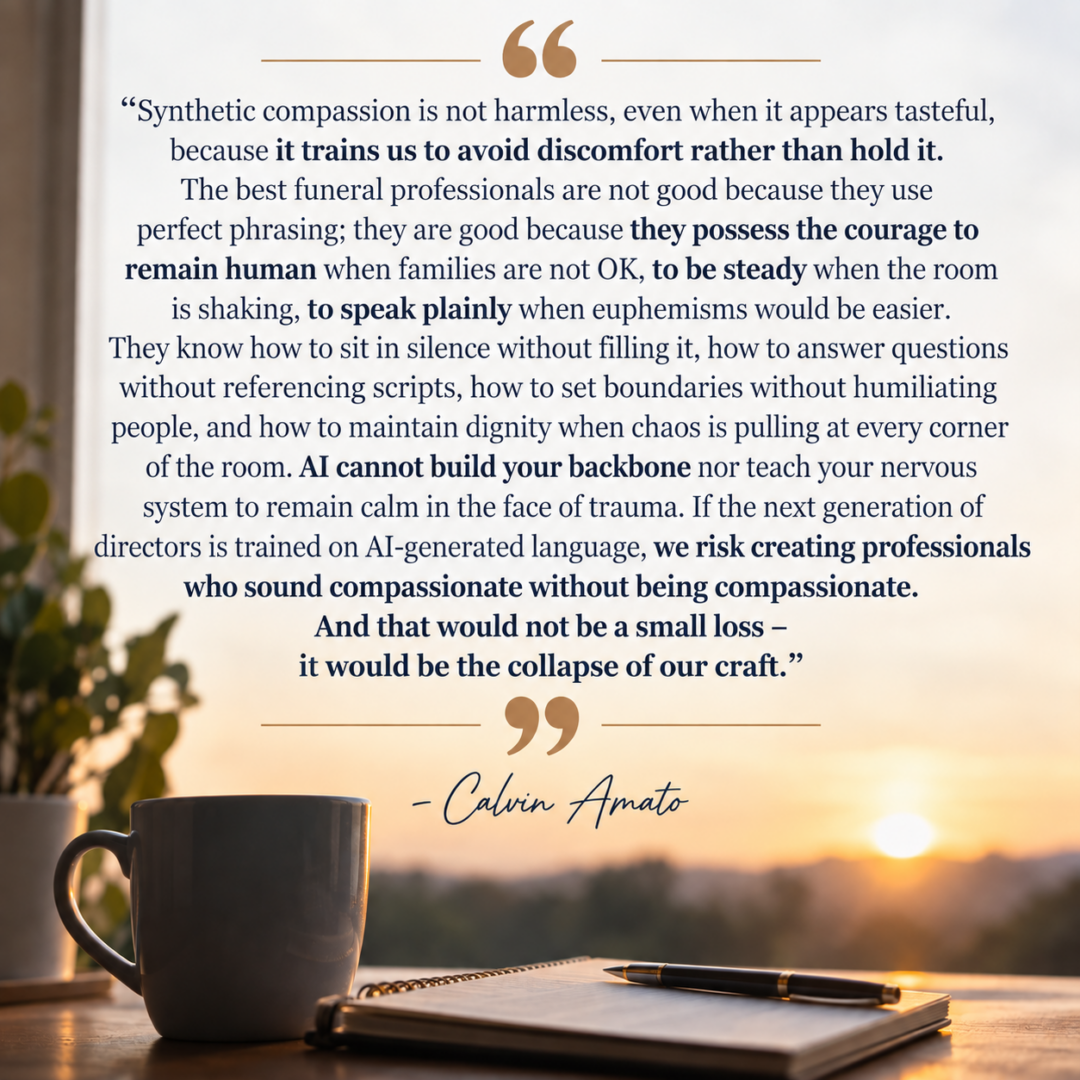
2. “The Profession That Cannot Be Automated” by Calvin Amato (Published by The Director magazine – an NFDA publication)
Originally published in the March 2026 issue of The Director and available to read online with permission here, this article is both timely and incredibly thought provoking. It’s not every day you stumble upon a piece of writing that challenges the way you think about something. This was an article I read and then shared with everyone I knew. Even my husband was subjected to hearing me read some excerpts from this one aloud, because even though he doesn’t work in death care some of the bigger ideas expressed about AI just felt so relevant and rang incredibly true.
There is honestly nothing more frustrating than when a person refuses to hear something because it contradicts their own world views. If your views are so strong, why would you be afraid to read something that challenges them? This article actually changed my opinion about some things and I truly believe that’s the best praise a writer can receive. Depending on where you stand on the current AI debates that are raging all over our world right now, you may have some strong convictions about how it should and shouldn’t be used by deathcare professionals. I hope you will have an open mind to consider some of the important questions this article raises. Whether you agree with all of the author’s conclusions or not, it offers a lot to think about at a time when our profession is still figuring out exactly where AI fits—and where it doesn’t.
One thing I really enjoyed about this article is that it gives a lot of different examples of ways it may seem harmless or convenient to use AI as a funeral professional but are actually “stripping funeral service of its humanity and integrity.” I appreciate the fact that the editor of The Director allowed Amato to devote eight full pages to this article because I genuinely don’t believe there is a single section that should have been cut. From the ethical ramifications of turning real moments of human grief into packaged content, to the disingenuousness of AI-written condolence emails, to valid concerns about the next generation of funeral professionals losing opportunities to develop authentic compassion, the article covers a lot of ground without ever feeling excessive. It also provides an ethical framework that funeral professionals can use to guide them through these uncharted waters.
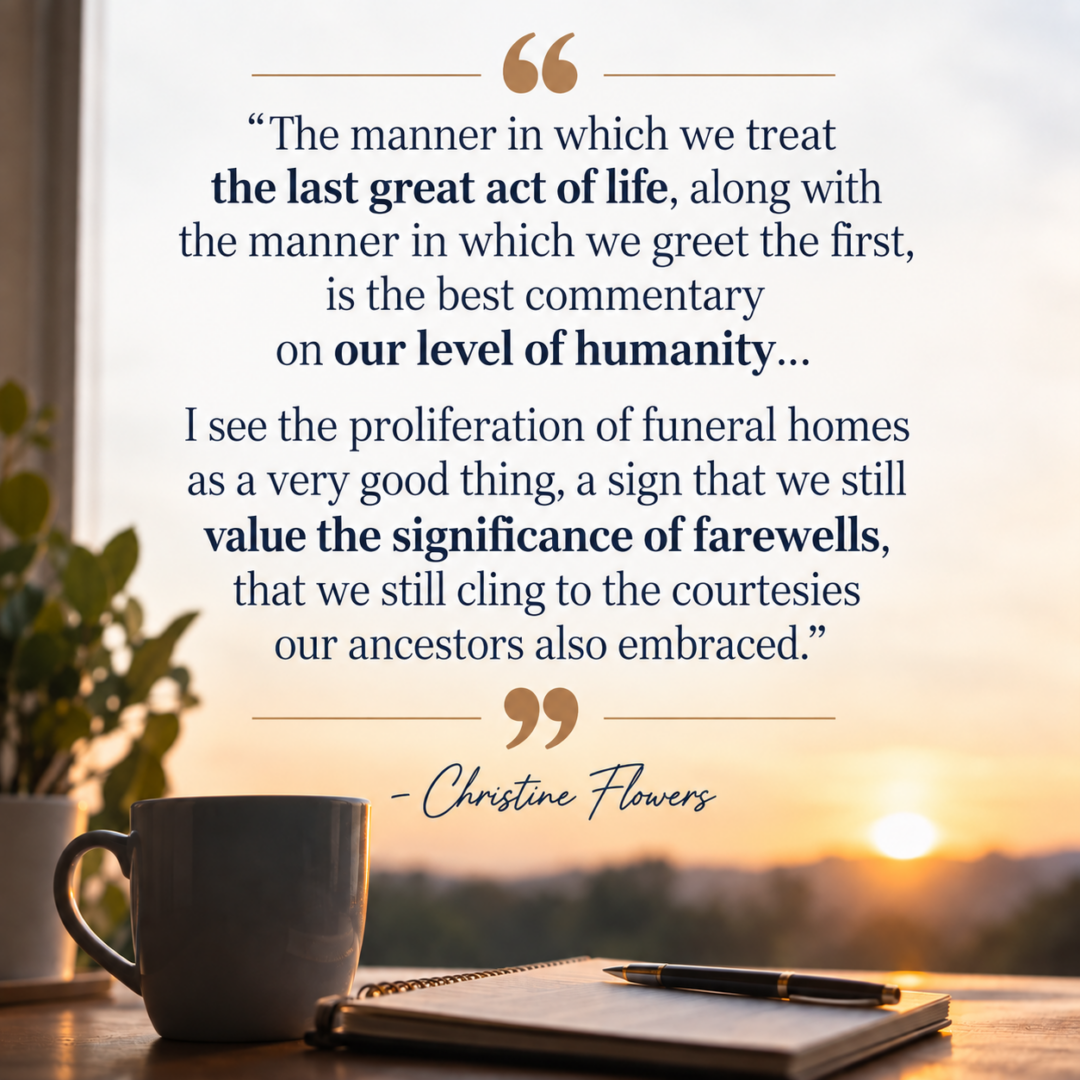
3. “Reflections on Mortality from Neighborhood with High Mortician Count” by Christine Flowers (Published by The Delaware County Daily Times)
Just about every person who enjoys the act of reading can probably name their favorite local columnist. It’s always enjoyable to combine some good writing with local familiarity. For me, Christine Flowers from the Delaware County Delaware Times is a treasure. Recently, one of her commentaries was focused on the high number of funeral homes in her neighborhood. I really enjoyed her perspective on how the prevalence of mortuaries reflects our local area’s understanding of the value of final rites. Her outlook on how baby showers and funerals are the events that best define our humanity really resonated with me.
4. A Dying Art by John Semley (Published by Harper’s Magazine)
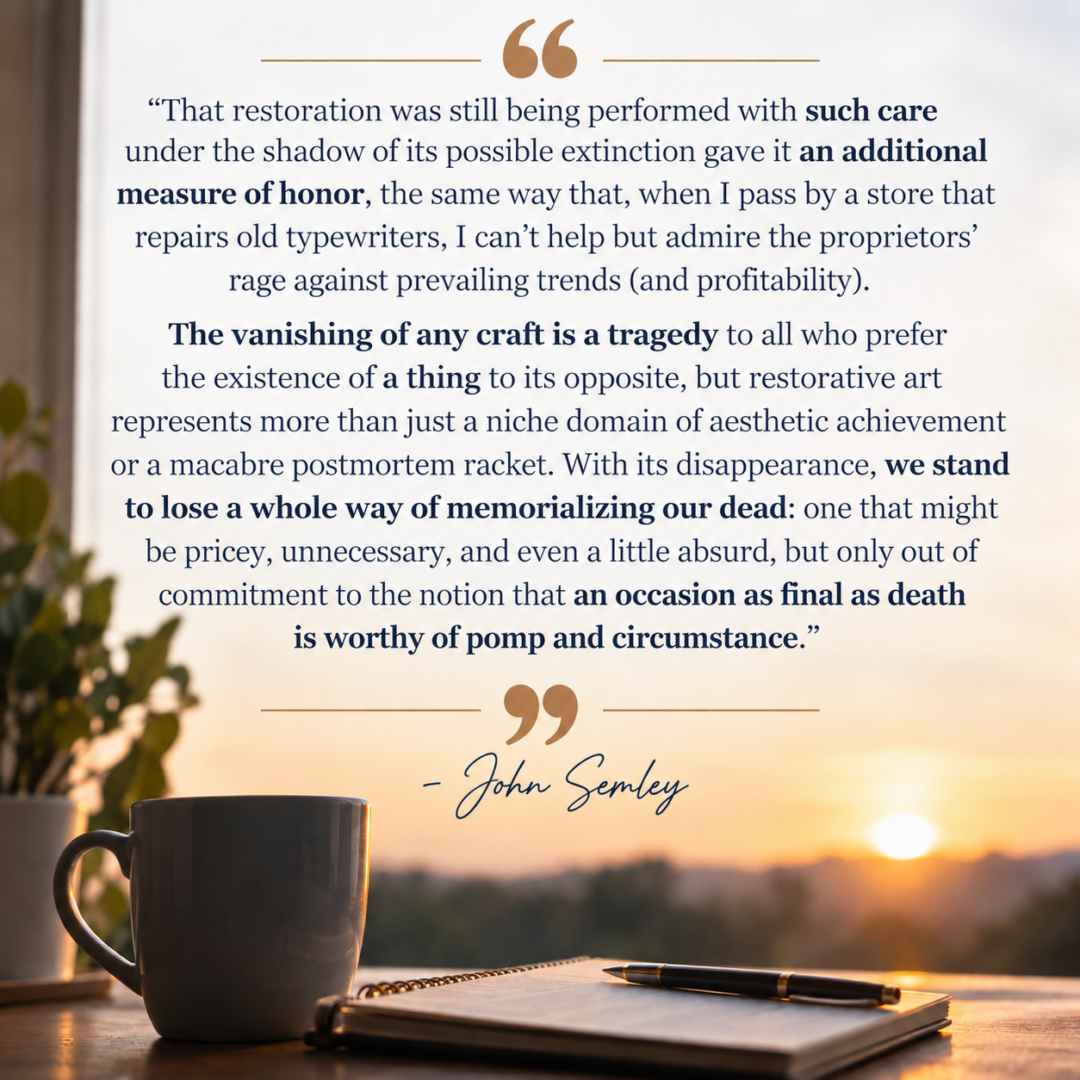
It’s always exciting to see a publication like Harper’s or The New Yorker devote serious attention to deathcare. While the history and evolution of embalming in America may be well-trod territory, the rich, evocative language of this piece makes the subject feel surprisingly fresh. (One of my favorite lines: “While restorative artists are accustomed to battling the ravages of time, it is now coming for their own discipline.”) The article is framed around the author’s visit to NFDA’s Restorative Art Technical Showcase, which becomes a jumping-off point for examining the debate surrounding embalming from the perspectives of both its critics and its practitioners.
After speaking with embalmers and watching showcase participants restore a wax model head, Semley follows an embalmer into her own morgue to observe the process firsthand. His descriptions convey an unmistakable reverence for the skill, precision and artistry involved—making the article feel, in some ways, like a tribute to a craft whose future is increasingly uncertain. As embalming rates decline and fewer practitioners specialize in restorative art, Semley captures not only how the work is done, but what could be lost as this once-central part of funeral service becomes something of a dying art itself.
5. The Quiet Erosion of Our Collective Relationship with Ceremony by Martha Thayer (Published on the Cremation Logs blog by CANA)
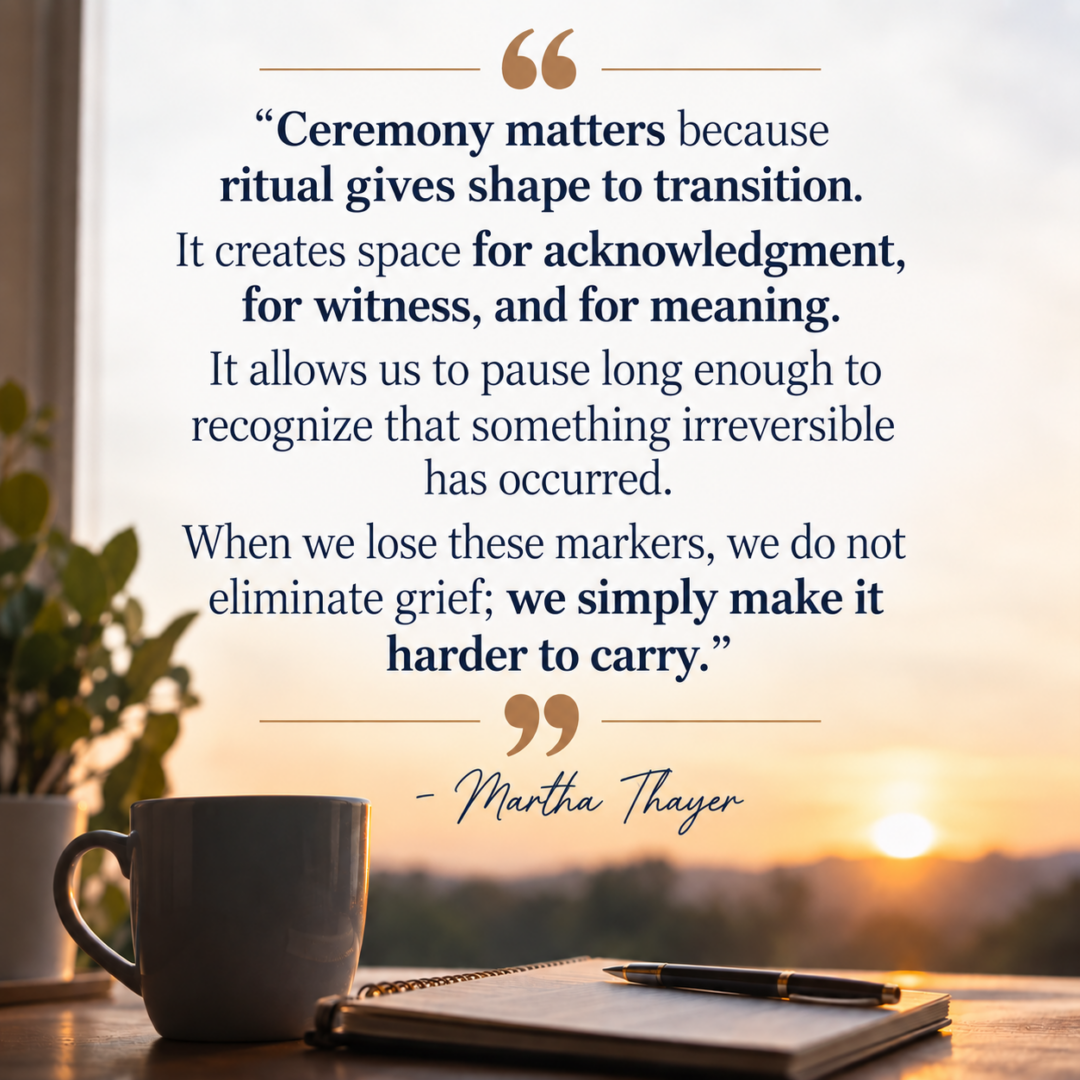
The Cremation Association of North America’s blog, The Cremation Logs, is an incredibly underrated source for interesting and insightful articles for funeral professionals. The blog frequently features guest posts from some of the best voices in funeral service, and one we particularly enjoyed recently was this essay from Martha Thayer about how Americans are increasingly choosing to forgo ceremonies that mark major moments in their lives—including funerals. Thayer explores what can be lost when we skip these rituals and how doing so can sometimes leave grief unresolved.
The piece also offers actionable advice for funeral directors on how to consistently communicate the value of ritual without pressuring families toward a particular choice. Thayer explains that funeral professionals must walk a fine line between respecting a family’s wishes and helping them understand why ceremony can matter, without insisting upon it. It’s a short but worthwhile read for any mortician navigating a time when more families are choosing direct cremation without any accompanying service or ceremony.
6. The Data Is Telling Us Something: What 654,000 Family Interactions Reveal About Funeral Service by Jay Jacobson (Published on FuneralVision.com)
Here’s a confession – most of the time when I start reading an article unpacking the results of a survey, I bail about halfway through. It’s not that the data is not interesting, but most writers struggle with explaining data in a way that feels interesting to read. You end up skimming to find out the facts and then moving on. This article was definitely the exception. In it, author Jay Jacobson shares the results of Johnson Consulting Group’s 2026 Trends & Insights from Performance Tracker X which includes results from a whopping 654,327 family service records collected over 5 years. That’s a lot of data!
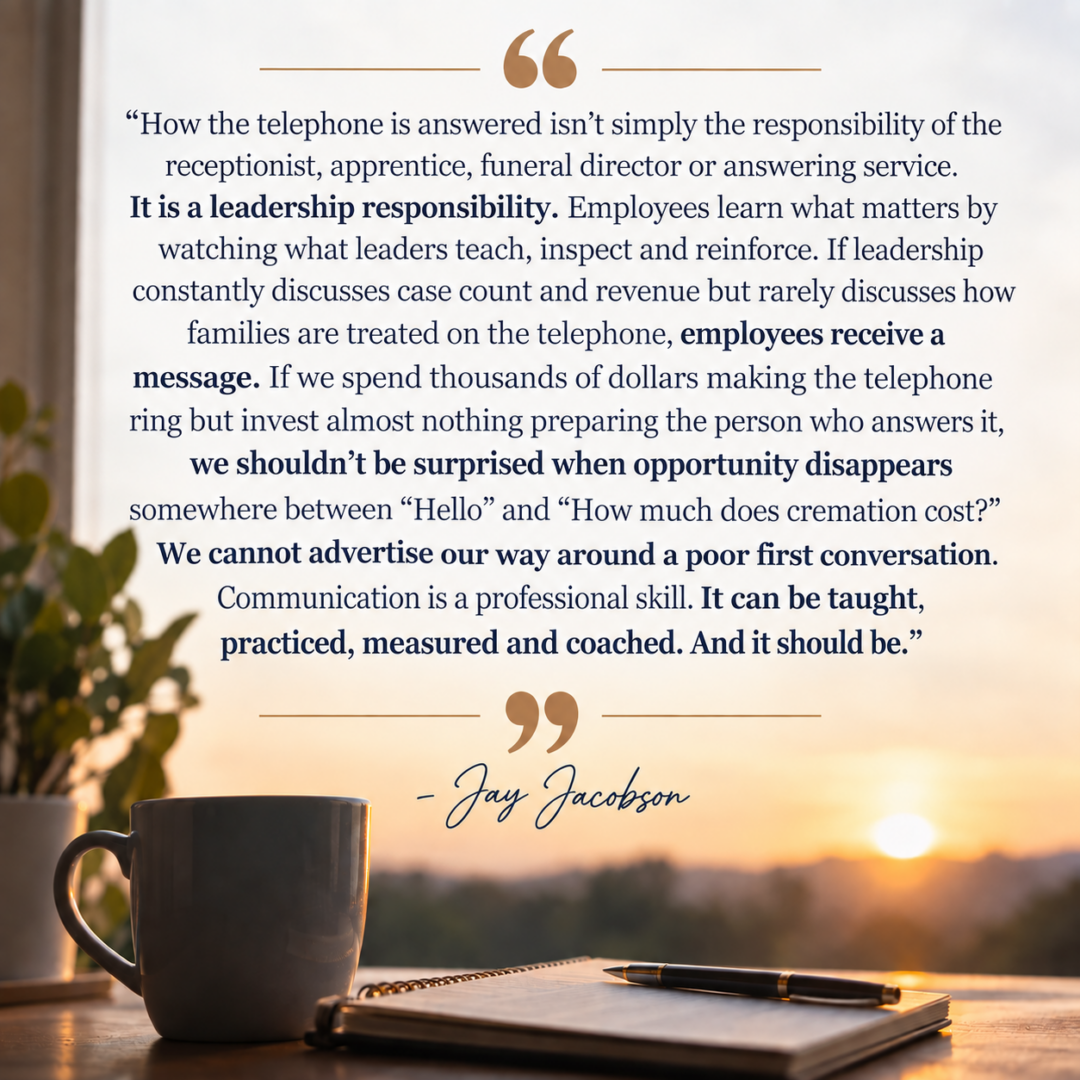
Instead of getting mired in all of the numbers, Johnson does an excellent job of breaking down the main takeaways from the report, all of which are eye-opening and worthy of consideration. What especially caught our attention was just how much of the article comes back to something so fundamental in funeral service: the telephone. Jacobson makes the point that a family’s experience with a funeral home often begins long before they ever sit down at the arrangement table—it begins with the person who answers that first call.
The article also raises an important question about how funeral homes train the people answering their phones. Funeral professionals receive extensive training in everything from embalming and compliance to arrangements and merchandise, but Jacobson asks how much intentional training is devoted to how someone speaks to a grieving caller—how they express condolences, recognize emotion, ask thoughtful questions and make the person on the other end of the line feel like they called the right place. His larger point is one we wholeheartedly agree with: you can invest all you want in getting the telephone to ring, but what happens after someone answers it is what really matters.
7. There Are Better Ways to Grieve than Vibe-Coding an App by Tony Russo (Published on the OnDeathcare blog)
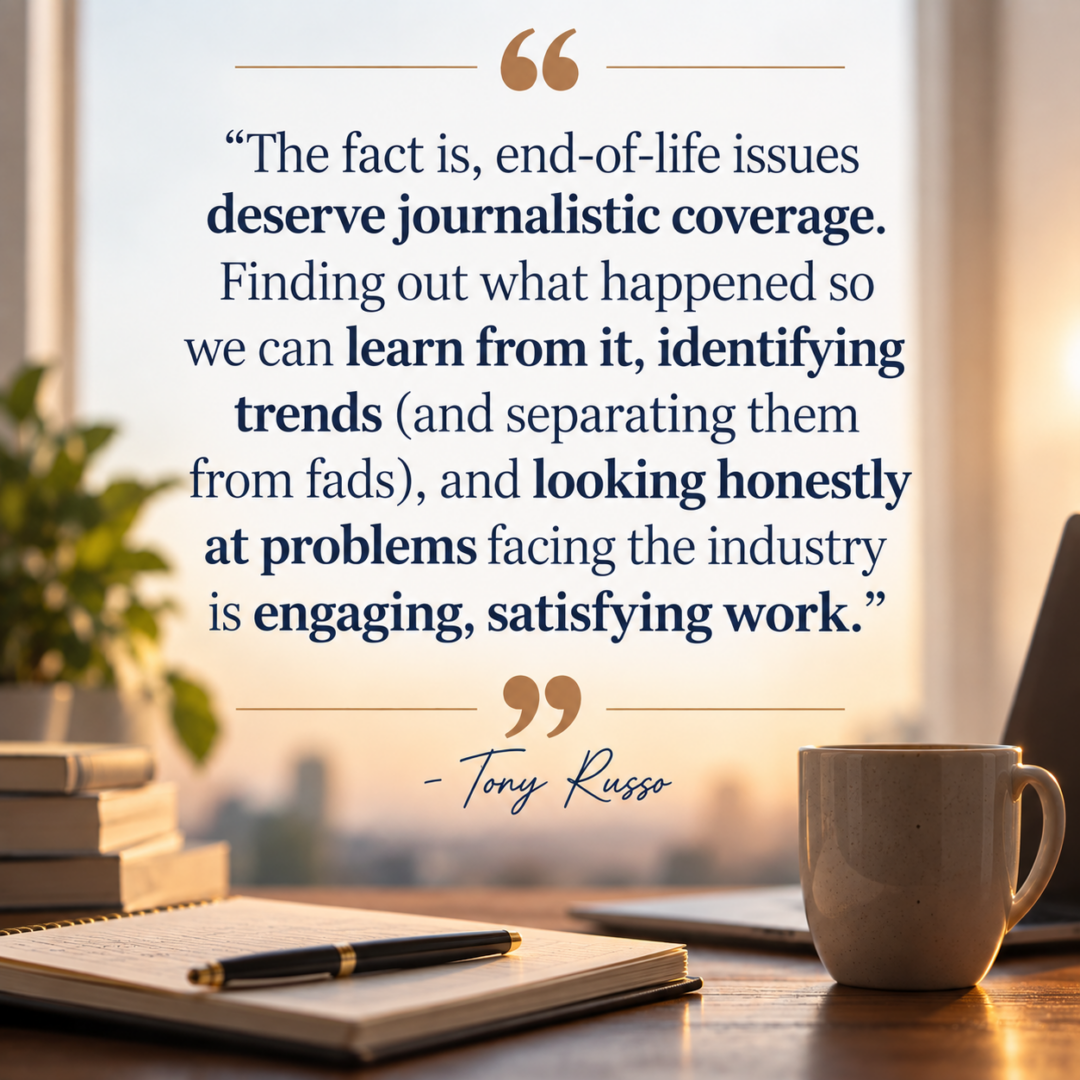
It was really hard to pick one piece from the On Deathcare blog to spotlight on this blog as Tony Russo’s site is just filled with all of these little nuggets of great copy. On more than one occasion I have found myself rereading something because I liked it so much or laughing out loud at one of his observations. If you know Tony, you know that he pulls no punches with his writing and if you have ever lamented the lack of real journalism in the funeral profession as I have, you will find the On Deathcare blog to be a breath of fresh air.
I know there are probably some in our profession that have written off Tony Russo and his OnDeathcare.com blog off as an outsider trying to stir up trouble in the profession. Perhaps you read a less than flattering portrayal of an organization or company you support and didn’t like it. However, the reality is our profession absolutely needs people who are willing to ask the tough questions, hold people accountable and get to the heart of a story without fear of reprisal. All of that aside, Tony is not only a great reporter but a terrific writer whose blogs will have you nodding your head or laughing out loud in your desk chair.
Case in point, this passage in the featured blog really gave me a good chuckle: “At my first (and, so far, most recent) NFDA convention back in 2022, I spoke with a big, sweaty gentleman who told me online arrangements wouldn’t work because people wanted to be hugged. I was new at the time but would have loved to have countered that the people who want to be hugged will still come to your funeral home, but why alienate the people who are terrified that you’ll hug them? Especially since many would still be happy to give you their business from a safe distance.”
The piece is a really interesting one dissecting the large number of newer technology companies targeting the funeral profession that have some sort of grief-motivated origin story. It’s an interesting observation I have never heard anyone else write about before. When grief becomes part of an origin story used to sell a product, it’s fair to ask where personal healing ends and marketing begins. That’s exactly what I appreciate about the On Deathcare blog: it notices these uncomfortable little patterns in the profession that most of us have seen but probably never stopped to examine quite this closely.
If you are still here, then I have accomplished my mission. Thank you for taking the time to read—and, more importantly, for giving some of these talented writers and their articles for funeral professionals a few more clicks along the way. From one writer who really appreciates a great turn of phrase, a fresh perspective and a story worth telling, I hope you found something here that made you want to keep reading, too.
Which piece of writing on our list resonated the most with you? Are there any good articles for funeral professionals we missed? Please share with us in the comments below.
Related Reading
10 Powerful Essays That Explain Why Funerals Matter
Exploring Valuable Tools for Deathcare Professionals: 18 Must-Know Funeral Director Resources
Speakers in the Funeral Profession Bringing Innovation and Insight to Deathcare