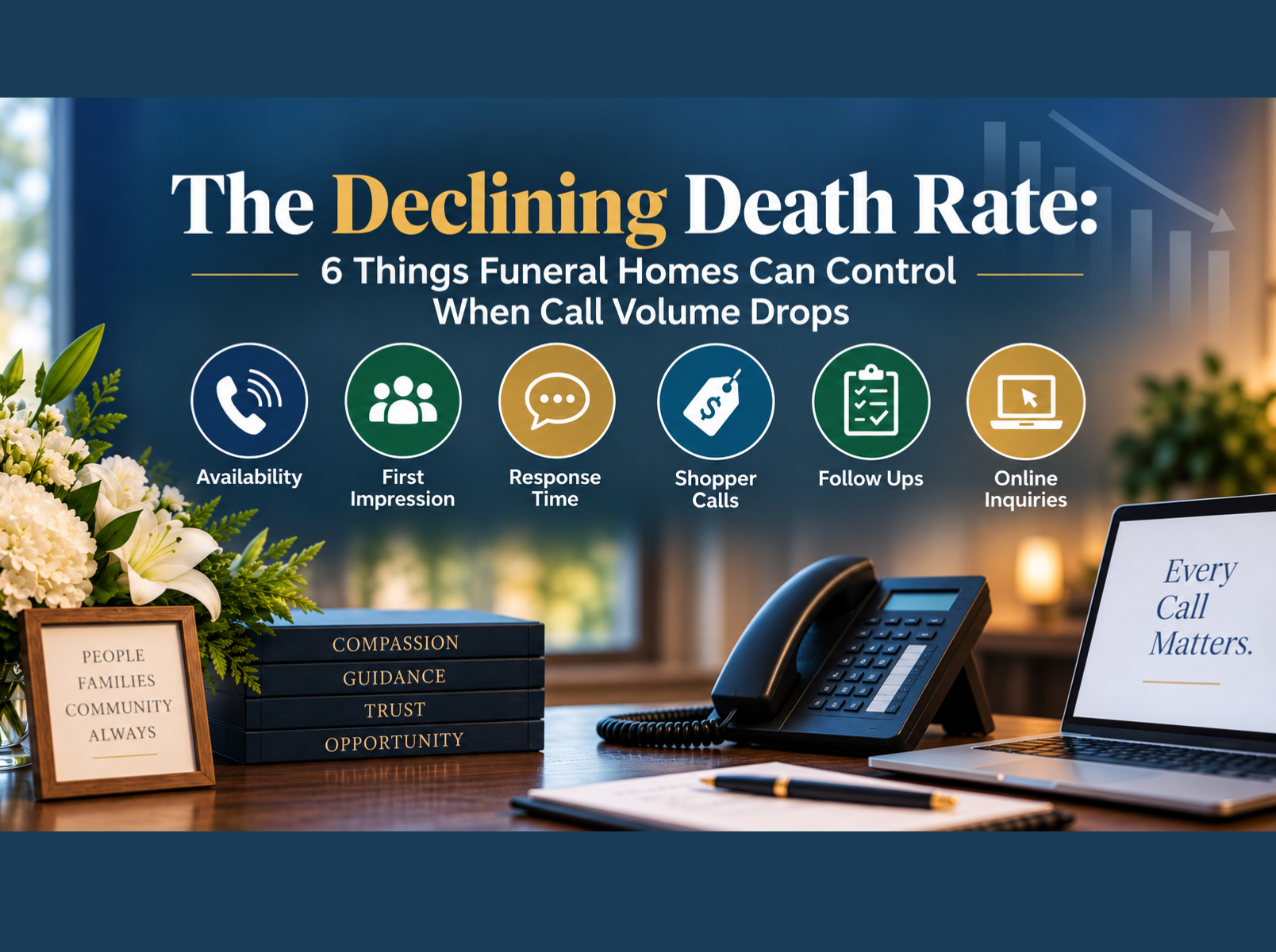
America’s declining death rate has reached a new milestone, with mortality falling to an all-time low. And behind that statistic are some genuinely encouraging numbers for society. The country recorded 11,340 fewer drug overdose deaths than the previous year, along with 3,100 fewer murders and nonnegligent manslaughters—a significant 18.1% decline. Fewer deaths from COVID-19 have also contributed to the decrease. These are numbers worth celebrating as they represent a positive change for our society. But for funeral homes, they also signal a changing business reality: when there are fewer calls to go around, answering every call isn’t just good customer service. It’s a growth strategy.
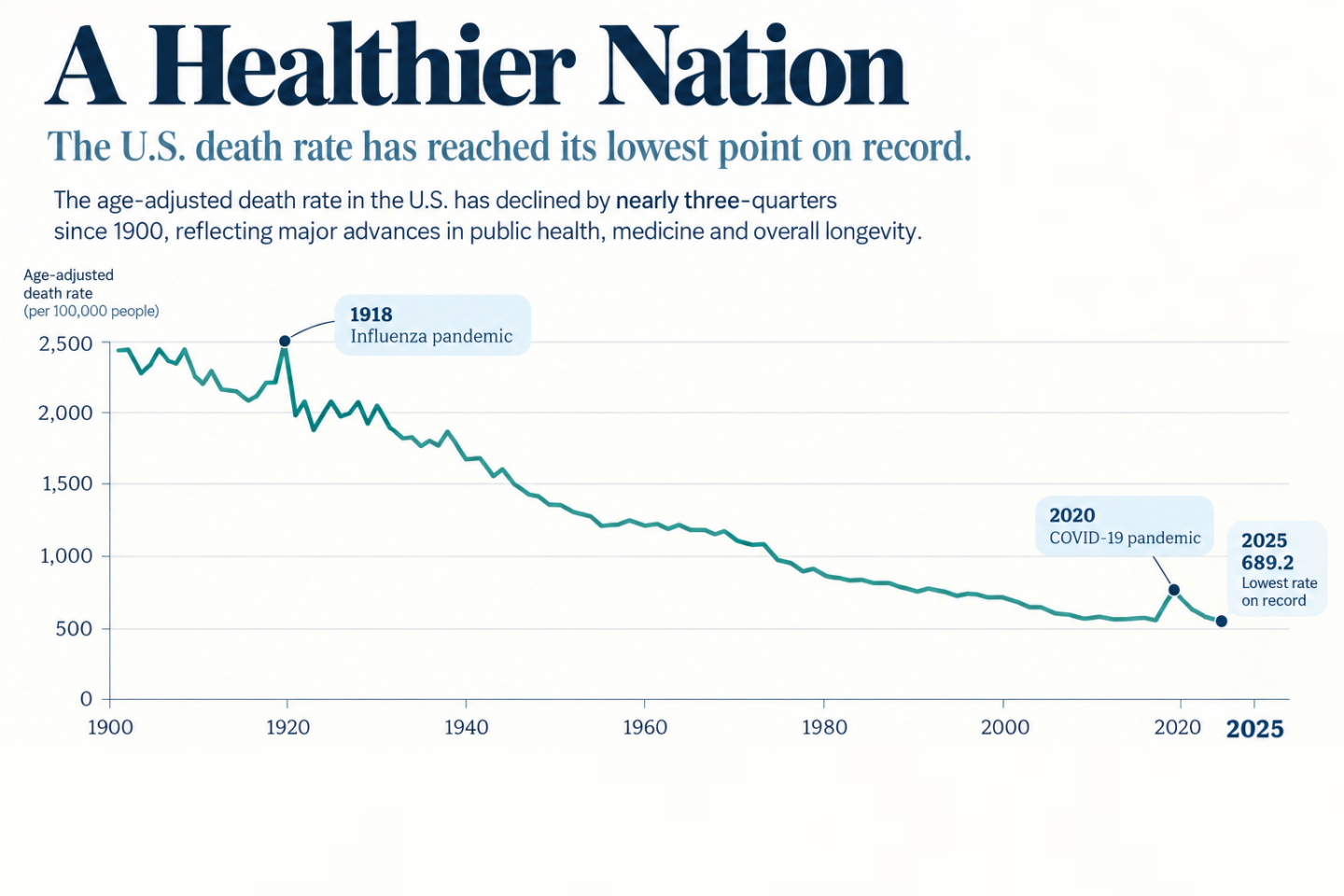
According to the CDC, the age-adjusted U.S. death rate fell 4.6% in 2025 to 689.2 deaths per 100,000 — the lowest rate on record. And this data isn’t merely hypothetical for funeral businesses: Service Corporate International, the largest funeral home conglomerate, reported a 6.6% decline in core funeral services performed in Q1 2026, followed by a smaller 1.7% decline in Q2, while emphasizing other ways of generating or protecting revenue. Just how much or how little the declining death rate has impacted your funeral home may depend on where you are located, but many firms are experiencing a noticeable drop in volume that is putting a ceiling on revenue growth.
With so many funeral homes feeling the squeeze, it is more important than ever to stop chasing new calls and start protecting the ones you already have. Funeral professionals can’t control national mortality trends, but they can control what happens when a family reaches out. Here are 6 things you can directly influence to ensure you never let an opportunity slip away:
1. Your Availability

When call volume declines, simply being available can become a competitive advantage. Families don’t always reach out during convenient business hours, and when someone is ready to make arrangements or has an urgent question, they may not be willing to leave a voicemail and wait for a return call. If your staff is assisting another family, conducting a service or away from the funeral home, you need a reliable way to ensure every caller still reaches a compassionate, knowledgeable person. Having the right support in place allows your funeral home to remain accessible around the clock without requiring your directors to remain tied to their phones.
ASD helps funeral homes maintain that constant availability, ensuring every call receives the attention it deserves without keeping directors tied to their phones. You can even program your lines to ring to ASD strictly as a backup. And when a caller is unwilling or unable to wait for a return call, ASD can directly patch them to the on-call funeral director. This added layer of responsiveness helps ensure an important opportunity isn’t lost simply because a family reached out at a busy or inconvenient time. If fewer families are calling funeral homes overall, can you afford to lose even one because no one answered?
2. Your First Impression

Funeral homes have always known every first call matters. But with the declining death rate contributing to tighter call volume, each opportunity carries even more weight. When fewer families are reaching out, a missed call or poor first impression can have a greater impact than it would during a high-volume period. That’s why the experience a family receives from the very first interaction matters so much. That initial conversation can shape how they perceive your funeral home’s compassion, professionalism and attentiveness from that moment forward. We recently came across an excellent article from our friends at Johnson Consulting Group that perfectly captured just how much weight that first conversation can carry:
“Before the arrangement conference. Before the service. Before the obituary, flowers, cemetery or merchandise, someone has already begun shaping how that family feels about the funeral home,” author Jay Jacobson states. “The first call isn’t what happens before customer experience. The first call is customer experience.”
For funeral homes, that makes every ringing phone an opportunity to establish trust from the very first hello. While you can’t always control when a family will call, you can control the experience they receive when they do. ASD helps funeral homes protect that critical first impression by ensuring callers are greeted by compassionate, funeral-trained professionals who understand the sensitivity of the moment and represent your firm with the care families expect—day or night.
3. Your Response Time
There is really no business quite like the funeral profession in terms of the need for immediate customer service at all hours of the day. Yes, you could argue that doctors have to be on-call for patients with urgent medical issues, but when you get down to it, if a doctor doesn’t respond the patient has the ability to call 9-1-1 or visit an urgent center. When families can’t get through to a funeral home after a death, the level of panic and anxiety they may experience is next level. They expect you will answer during their time of need, and not meeting that standard, even one time, could lose you the trust of a family you have worked with for generations.
This is why it is more imperative than ever that funeral homes invest in back up protection for their urgent, time sensitive communications to ensure that every call without exception is answered without delay. Many of the funeral homes we work with use ASD strictly as a backup to ensure if the line is not answered by a certain number of rings, someone will always answer the call. We also have experience speaking to panicked family members who contact a funeral home ASD answers for only after they had tried unsuccessfully to reach a different funeral home. This scenario has revealed to us just how much trust is lost between families and funeral homes when there is a lack of responsive customer service. ASD can help you create a communication strategy that ensures you never miss an opportunity to serve a family.
4. How You Handle Price Shoppers

Consider this scenario: A family needs a funeral home. They search online. They call Funeral Home A. No one answers. They leave a message, but their call is never returned. They call Funeral Home B. Someone answers immediately, compassionately gathers their information and connects them with the director. Funeral Home A may never even know that opportunity existed. Now multiply that by an entire year.
We’ve written before on this blog about how dismissing a caller who requests prices as a low-value customer is detrimental to any funeral home’s growth strategy. This has never been truer than today with fewer calls to go around and an increasing number of families just using google to search nearby funeral homes when a loved one passes. If you aren’t available when they call—or their first interaction leaves them feeling dismissed—another funeral home is only a search result away.
That’s where ASD can make a measurable difference. By ensuring your calls are answered promptly and compassionately, day or night, ASD helps you protect opportunities that might otherwise be lost. Our funeral-trained Call Specialists can gather critical information, answer according to your preferences and connect urgent or price-sensitive callers directly to the on-call director—helping your funeral home make every call count.
5. How You Follow Up

If there’s one area where funeral homes may be leaving opportunities on the table, it’s follow-up. And it’s easy to understand why. You speak with a caller requesting prices for a loved one nearing the end of life. Then the next call comes in, a family walks through the door and several days pass. Before you know it, that initial conversation has fallen off your radar—and the family may have chosen another funeral home.
When call volume is tighter, those conversations are too valuable to forget. ASD’s Deep Archive gives you access to up to 10 years of categorized call history, making it easy to revisit interactions such as preneed inquiries and identify families who may benefit from a follow-up call. A simple check-in could answer lingering questions, strengthen the relationship or uncover an opportunity that otherwise would have been lost.
Follow-up shouldn’t necessarily end once the funeral or cremation is complete, either. Recent data shows that many families hold onto cremated remains because they’re unsure what to do with them. Reaching back out gives you an opportunity to offer guidance on memorialization, inurnment or scattering options. For example, families interested in aerial scattering can be referred to ASD-owned Cremation Air, helping you provide an additional solution while earning referral revenue for your funeral home.
6. Your Website inquires

Your funeral home’s website is often the first place a family turns for information, and not everyone is ready to pick up the phone. With the declining death rate creating a more competitive environment for funeral homes, online inquiries deserve the same urgency as a phone call. A family who submits a question through your contact form may be actively choosing between providers, and a slow or missed response could be all it takes for them to look elsewhere.
ASD’s Web Form WatchDog™ helps make sure that doesn’t happen. Whenever someone submits a form through your website, the designated on-call person is immediately notified by text, email or the ASD Mobile app based on your preferences. If the message isn’t acknowledged within a predetermined amount of time, ASD follows up with a phone call to ensure it doesn’t slip through the cracks. When there are fewer calls to go around, protecting every point of contact matters—and ASD helps ensure families receive a timely response whether they reach out by phone or online.
Final Thoughts
You can’t control the national death rate, your community’s mortality rate, or how many at-need families will enter the market. You can control how prepared your funeral home is when one of those families reaches out. Funeral directors have always understood that fewer calls can be a good thing when they represent fewer preventable deaths from overdoses, violence and other tragedies. Today, that is increasingly becoming a reality. The declining death rate is an encouraging development for society—and an opportunity for funeral homes to adapt by strengthening the areas they can control, protecting every call and making every family interaction count.
Related Reading
7 ASD Features that Matter Most to Your Funeral Home Callers
7 Tips for Funeral Homes to Elevate Customer Service with Enhanced Communication
4 Things You Can Do Today to Improve Your Funeral Home’s Customer Service